My Biggest Investing Regret: Selling Too Soon
I’ve been investing for over 30 years, and if there’s one lesson I keep coming back to, it’s this:
I would have been better off buying great companies and simply holding them.
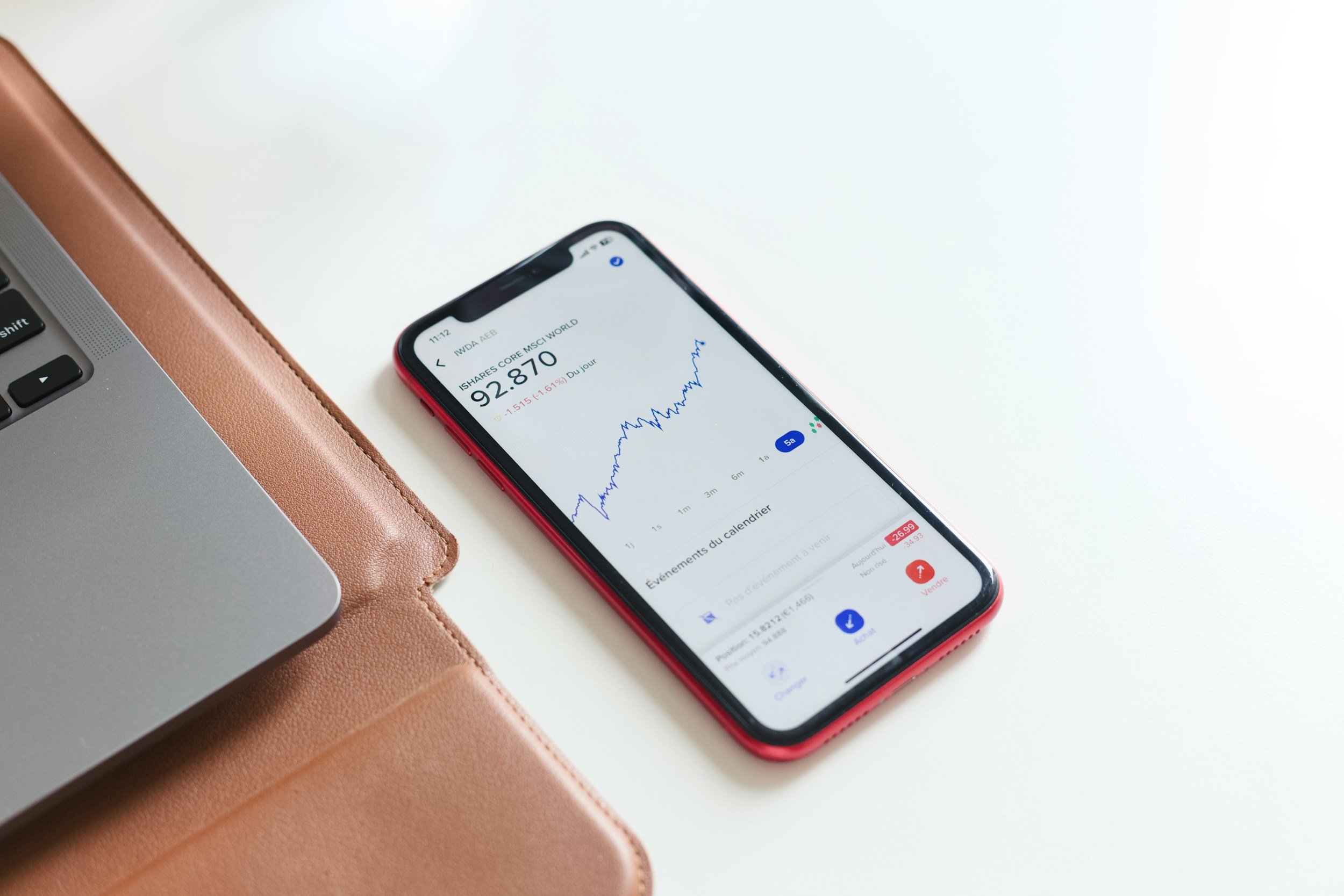
I would be much further along had I just held those stocks. It’s even hard to think about when I sold Apple and Google, but you can’t change the past, but here is some things that I learned in this:
Not trading them.
Not trimming too early.
Not trying to be clever.
Just holding.
That sounds easy, but it’s one of the hardest things to do in investing.
The Power of Inaction
There’s a widely circulated story about a Fidelity Investments study in 2014 that found some of the best-performing accounts belonged to two unusual groups: people who had died, and people who had forgotten they had an account.
Whether or not the exact study has been formally verified, the lesson is powerful: investors often hurt themselves by doing too much.
We react to headlines.
We sell because a stock has gone up “too much.”
We try to time the market.
We confuse activity with progress.
In investing, inactivity is often underrated.
Think Like a Business Owner
Warren Buffett has said that if you aren’t willing to own a stock for 10 years, you shouldn’t think about owning it for 10 minutes.
That idea has always stuck with me.
A stock isn’t just a ticker symbol. It’s ownership in a business. If you owned a great local business, you wouldn’t sell it because of one bad news cycle or a temporary downturn. You’d look at the fundamentals, the leadership, the debt, the cash flow, and the long-term opportunity.
That’s how I think individual stocks should be approached.
My Apple Lesson
Apple is probably my clearest personal example.
Over my investing life, I’ve bought and sold Apple three or four times (I can’t remember). The last time I sold was when Apple hit a $1 trillion market cap, I just didn’t think the company could go any higher, it’s now at 4.41T as of this article.
At the time, that felt enormous.
Had I simply held on, the outcome would have been dramatically better, like 4 times better.
That’s the pattern I see when I look back. My biggest regrets aren’t usually the stocks I held too long. They’re the great companies I sold too early.
My Rules for Individual Stocks
If I’m going to own an individual company, I want it to be a truly great business.
For me, that means:
Strong balance sheet
Little to no debt
Durable competitive advantage
Great leadership
Long-term demand for its products or services
A business I’d be comfortable owning for 10 years or more
If I can’t understand the company well enough or understand the product to make that kind of commitment, I probably shouldn’t own the individual stock.
When in Doubt, Buy the ETF
The honest truth is that most people are not great at identifying exceptional companies early and then holding them through volatility.
That’s where ETFs come in.
If you don’t have the conviction, time, or ability to evaluate individual companies, and be diversified, a low-cost broad-market ETF is often the better choice. It gives you diversification, reduces the risk of one bad pick, and helps remove some of the emotional decision-making that hurts investors.
In many cases, the simplest strategy is also the strongest one:
Buy a broad ETF. Keep adding to it. Leave it alone.
The lesson after more than 30 years
After three decades of investing, my biggest lesson is simple:
Buy great companies. Avoid highly leveraged businesses. Hold for a very long time. And if you can’t confidently do that, buy the ETF.
Most investors don’t need more activity.
They need more patience.
The market rewards time, discipline, and the ability to ignore noise. Just look at the historical charts.
Looking back, I don’t wish I had traded more.
I wish I had held longer.